Buy shopping-outlets.com ?
We are moving the project
shopping-outlets.com .
Are you interested in purchasing the domain
shopping-outlets.com ?
domain@kv-gmbh.de · 0541-91531010
Buy shopping-outlets.com ?
What are coastal waters?
Coastal waters are the areas of the ocean that are near the shore and influenced by the land. They are typically shallow and can include bays, estuaries, and inlets. These areas are important for a wide variety of marine life and are also used for recreational activities such as swimming, surfing, and fishing. Coastal waters are also vulnerable to pollution and human activities, making them a focus of conservation and management efforts. **
What coastal landforms are there?
Coastal landforms include beaches, cliffs, headlands, bays, and spits. Beaches are gently sloping areas of sand or pebbles that are formed by the action of waves and currents. Cliffs are steep rock formations that are eroded by the sea, while headlands are high points of land that jut out into the sea. Bays are curved indentations in the coastline, and spits are narrow strips of land that extend out into the sea. These landforms are constantly shaped and reshaped by the forces of erosion and deposition along the coast. **

Similar search terms for Crestview-Collection-Coastal-Shell
Top-Angebote
Products related to Crestview-Collection-Coastal-Shell:
-
Crestview Collection Huxley Antler Uplight Lamp Brown , BrownBrighten up any rustic retreat with the Huxley Antler Uplight. This uplight lamp has a seeded glass globe with filters surrounded by resin deer antlers on a brown, round log-style base. UL listed. Requires one 60W max. bulb. Measures 8 dia.x17.5 H....119,99 $*Shipping: 0,00 $Secure redirect to the provider
-
Crestview Collection Romy Table Lamp Pair, Pair, GreenA delicate charm and a unique versatile style detail the Romy Table Lamp Pair. Perfect for traditional, eclectic, and contemporary tastes, the lamps feature clear crystal square bases topped with radiant gold-finished stacked, curved resin shapes...385,99 $*Shipping: 0,00 $Secure redirect to the provider
-
Crestview Collection Crab Island Chairside Accent Table Blue , BlueThe Crab Island Chairside Accent Table offers a chic, coastal simplicity with a whimsical touch. Finished in a soothing slate blue hue, the wooden table features a rectangular design with crisp lines, an ample display top, and two open shelves. A...329,99 $*Shipping: 0,00 $Secure redirect to the provider



-
Where do coastal deserts form?
Coastal deserts form in regions where cold ocean currents flow along the coastline, creating dry and arid conditions. These deserts are typically located on the western coasts of continents, such as the Atacama Desert in South America and the Namib Desert in Africa. The cold ocean currents prevent moisture from reaching the land, resulting in very low precipitation levels and the formation of coastal desert environments. **
-
Which animals inhabit the coastal deserts?
Coastal deserts are home to a variety of animals that have adapted to the harsh and arid environment. Some of the animals that inhabit coastal deserts include the desert iguana, the sidewinder rattlesnake, the kangaroo rat, the desert tortoise, and various species of birds such as the roadrunner and the burrowing owl. These animals have developed special adaptations to survive in the extreme heat and limited water availability of the coastal desert environment. Many of them are nocturnal or crepuscular to avoid the hottest parts of the day, and they have evolved efficient ways to conserve water. **
-
How does a coastal desert form?
A coastal desert forms when cool ocean currents create a stable high-pressure system that prevents moisture from reaching the land. As a result, the air becomes dry and warm, leading to low humidity and little precipitation. The combination of these factors creates a desert environment along the coast. Additionally, the presence of mountains or other barriers can further block moisture from reaching the coastal area, contributing to the formation of a coastal desert. **
-
How are coastal deserts formed, in short?
Coastal deserts are formed due to the combination of dry, descending air from high-pressure systems and the cooling effect of ocean currents. As the air descends, it warms and absorbs moisture, creating arid conditions along the coast. Additionally, the presence of cold ocean currents can further reduce the amount of moisture in the air, leading to the formation of coastal deserts. These factors result in low precipitation and high evaporation rates, creating the dry and barren landscapes characteristic of coastal deserts. **


What are windward deserts and coastal deserts?
Windward deserts are located on the side of a mountain range that faces the prevailing wind direction. As the air rises over the mountains, it cools and releases moisture, creating a rain shadow effect on the leeward side of the mountains, resulting in dry and arid conditions. Coastal deserts, on the other hand, are located along the coastlines and are influenced by the cool ocean currents. These deserts often experience low precipitation and high evaporation rates due to the proximity to the ocean, resulting in dry and desert-like conditions. Both windward deserts and coastal deserts are characterized by their arid climates and limited vegetation. **
How did this coastal form come about exactly?
This coastal form, known as a tombolo, is formed through a combination of wave action, sediment transport, and the presence of an offshore island or rock. Over time, waves and currents deposit sand and gravel, creating a narrow strip of land that connects the offshore feature to the mainland. The tombolo continues to grow and evolve as sediment is deposited and reshaped by the forces of nature. The process can take thousands of years to form a tombolo, depending on the local geology and coastal dynamics. **
Top-Angebote
Products related to Crestview-Collection-Coastal-Shell:
-
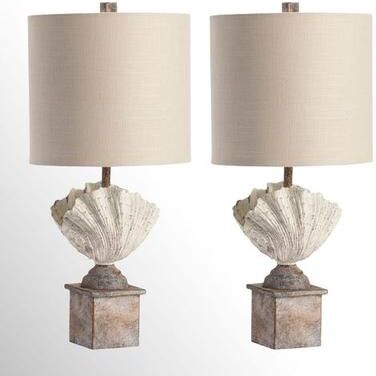
Crestview Collection Coastal Shell Table Lamps Ivory Set of Two, Set of Two, IvoryCoastal Shells are a beach lover's treasure. Made of resin, this table lamp pair features realistic-looking, ivory clamshells. Each shell is on a pedestal base with a taupe textured metal bar connecting the cream fabric drum shade. UL listed. Each...299,99 $*Shipping: 0,00 $Secure redirect to the provider
-
Crestview Collection Huxley Antler Uplight Lamp Brown , BrownBrighten up any rustic retreat with the Huxley Antler Uplight. This uplight lamp has a seeded glass globe with filters surrounded by resin deer antlers on a brown, round log-style base. UL listed. Requires one 60W max. bulb. Measures 8 dia.x17.5 H....119,99 $*Shipping: 0,00 $Secure redirect to the provider
-
What are coastal waters?
Coastal waters are the areas of the ocean that are near the shore and influenced by the land. They are typically shallow and can include bays, estuaries, and inlets. These areas are important for a wide variety of marine life and are also used for recreational activities such as swimming, surfing, and fishing. Coastal waters are also vulnerable to pollution and human activities, making them a focus of conservation and management efforts. **
-
What coastal landforms are there?
Coastal landforms include beaches, cliffs, headlands, bays, and spits. Beaches are gently sloping areas of sand or pebbles that are formed by the action of waves and currents. Cliffs are steep rock formations that are eroded by the sea, while headlands are high points of land that jut out into the sea. Bays are curved indentations in the coastline, and spits are narrow strips of land that extend out into the sea. These landforms are constantly shaped and reshaped by the forces of erosion and deposition along the coast. **
-
Where do coastal deserts form?
Coastal deserts form in regions where cold ocean currents flow along the coastline, creating dry and arid conditions. These deserts are typically located on the western coasts of continents, such as the Atacama Desert in South America and the Namib Desert in Africa. The cold ocean currents prevent moisture from reaching the land, resulting in very low precipitation levels and the formation of coastal desert environments. **
-
Which animals inhabit the coastal deserts?
Coastal deserts are home to a variety of animals that have adapted to the harsh and arid environment. Some of the animals that inhabit coastal deserts include the desert iguana, the sidewinder rattlesnake, the kangaroo rat, the desert tortoise, and various species of birds such as the roadrunner and the burrowing owl. These animals have developed special adaptations to survive in the extreme heat and limited water availability of the coastal desert environment. Many of them are nocturnal or crepuscular to avoid the hottest parts of the day, and they have evolved efficient ways to conserve water. **
Similar search terms for Crestview-Collection-Coastal-Shell
-
Crestview Collection Romy Table Lamp Pair, Pair, GreenA delicate charm and a unique versatile style detail the Romy Table Lamp Pair. Perfect for traditional, eclectic, and contemporary tastes, the lamps feature clear crystal square bases topped with radiant gold-finished stacked, curved resin shapes...385,99 $*Shipping: 0,00 $Secure redirect to the provider
-
Crestview Collection Crab Island Chairside Accent Table Blue , BlueThe Crab Island Chairside Accent Table offers a chic, coastal simplicity with a whimsical touch. Finished in a soothing slate blue hue, the wooden table features a rectangular design with crisp lines, an ample display top, and two open shelves. A...329,99 $*Shipping: 0,00 $Secure redirect to the provider
-
Crestview Collection Olympia Wall Sconce Lamp Pair Gold, Pair, GoldGrace a space with the sophisticated luxury of the Olympia Wall Sconce Lamp Pair. Finished in gilded gold, each metal wall sconce features a charming candlestick-inspired shape with a beveled circular backplate and a white linen cylindrical shade....269,99 $*Shipping: 0,00 $Secure redirect to the provider
-
Crestview Collection Grand Bay Starfish Chairside Accent Table Aqua , AquaThe Grand Bay Starfish Chairside Accent Table offers a chic, coastal simplicity with a whimsical touch. Finished in a soothing aqua blue hue, the wooden table features a rectangular design with crisp lines, an ample display top, and two open...329,99 $*Shipping: 0,00 $Secure redirect to the provider
-
How does a coastal desert form?
A coastal desert forms when cool ocean currents create a stable high-pressure system that prevents moisture from reaching the land. As a result, the air becomes dry and warm, leading to low humidity and little precipitation. The combination of these factors creates a desert environment along the coast. Additionally, the presence of mountains or other barriers can further block moisture from reaching the coastal area, contributing to the formation of a coastal desert. **
-
How are coastal deserts formed, in short?
Coastal deserts are formed due to the combination of dry, descending air from high-pressure systems and the cooling effect of ocean currents. As the air descends, it warms and absorbs moisture, creating arid conditions along the coast. Additionally, the presence of cold ocean currents can further reduce the amount of moisture in the air, leading to the formation of coastal deserts. These factors result in low precipitation and high evaporation rates, creating the dry and barren landscapes characteristic of coastal deserts. **
-
What are windward deserts and coastal deserts?
Windward deserts are located on the side of a mountain range that faces the prevailing wind direction. As the air rises over the mountains, it cools and releases moisture, creating a rain shadow effect on the leeward side of the mountains, resulting in dry and arid conditions. Coastal deserts, on the other hand, are located along the coastlines and are influenced by the cool ocean currents. These deserts often experience low precipitation and high evaporation rates due to the proximity to the ocean, resulting in dry and desert-like conditions. Both windward deserts and coastal deserts are characterized by their arid climates and limited vegetation. **
-
How did this coastal form come about exactly?
This coastal form, known as a tombolo, is formed through a combination of wave action, sediment transport, and the presence of an offshore island or rock. Over time, waves and currents deposit sand and gravel, creating a narrow strip of land that connects the offshore feature to the mainland. The tombolo continues to grow and evolve as sediment is deposited and reshaped by the forces of nature. The process can take thousands of years to form a tombolo, depending on the local geology and coastal dynamics. **
* All prices are inclusive of VAT and, if applicable, plus shipping costs. The offer information is based on the details provided by the respective shop and is updated through automated processes. Real-time updates do not occur, so deviations can occur in individual cases. ** Note: Parts of this content were created by AI.